The short answer
Pasco County doesn’t collect trash itself, so everyday yard waste goes out with your private hauler. You can also drop it at West Pasco or East Pasco for $5.20 per 100 pounds (Pasco County). Burning is allowed only if the pile fits within 8 feet, meets Florida’s setbacks and no burn ban is on.
Branches, palm fronds and grass don’t stop growing in Pasco, and neither does the pile by the side of the house. There are four ways to get rid of it: your trash hauler, a county drop-off, burning it where that’s allowed, or a one-time haul. Here’s how each one works and what it costs.
Who picks up yard waste in Pasco County?
Your trash hauler does. The county says it doesn’t pick up trash, and homes have to sign up with a licensed hauler for curbside service (Pasco County trash information). These are the haulers the county lists:
- City of Zephyrhills (inside city limits only): 813-780-0022
- Coastal Waste & Recycling: 888-522-5794
- J.D. Parker and Sons: 727-845-1024
- Republic (formerly Seaside): 727-868-2566
- Waste Aid: 727-842-9309
- Waste Connections, west and west central Pasco: 727-847-9100
- Waste Connections, east and east central Pasco: 352-583-4204
- Waste Management: 800-255-7172
Each hauler sets its own yard waste rules: which day, how to bundle branches, how long pieces can be and how much it takes at once. The county doesn’t keep a record of which hauler serves each home, and it says service problems go to the hauler, so the number on your bill is the one to call.
After the 2024 hurricanes, the county’s advice for leftover yard waste was to cut it into bundles about four feet long and put them in the trash can or at the curb on your regular pickup day (Laker/Lutz News). That’s a good default if your hauler hasn’t told you otherwise. Some neighborhoods get service through an HOA or community district instead, and the rules come from them. If you just moved in and have no service yet, call one of the haulers above to sign up.
Dropping off yard waste yourself
Pasco residents can bring yard waste to West Pasco Resource Recovery (14606 Hays Road, Spring Hill) or the East Pasco Transfer Station (9626 Handcart Road, Dade City), Monday to Saturday, 7 a.m. to 4:30 p.m. Bring proof of residency. Yard waste is charged $104.03 a ton, or $5.20 for every 100 pounds (Pasco County trash information).
Yard waste is lighter than most people expect when it’s dry and much heavier when it’s green or wet. A pickup bed of dry palm fronds may weigh a few hundred pounds, which works out to a fee in the teens. Fresh-cut oak limbs or a load after a rainstorm weigh far more.
Keep yard waste separate from other trash in the load, and tie a tarp over it for the drive: Florida law says loose material has to be kept from blowing out of a vehicle on a public road (Florida Statutes 316.520). Our Pasco County dump guide covers the drop-off step by step.
The county’s recycling drop-offs in Holiday and Land O’ Lakes aren’t for yard waste; they take cans, cardboard, paper and plastic containers (Pasco County recycling).
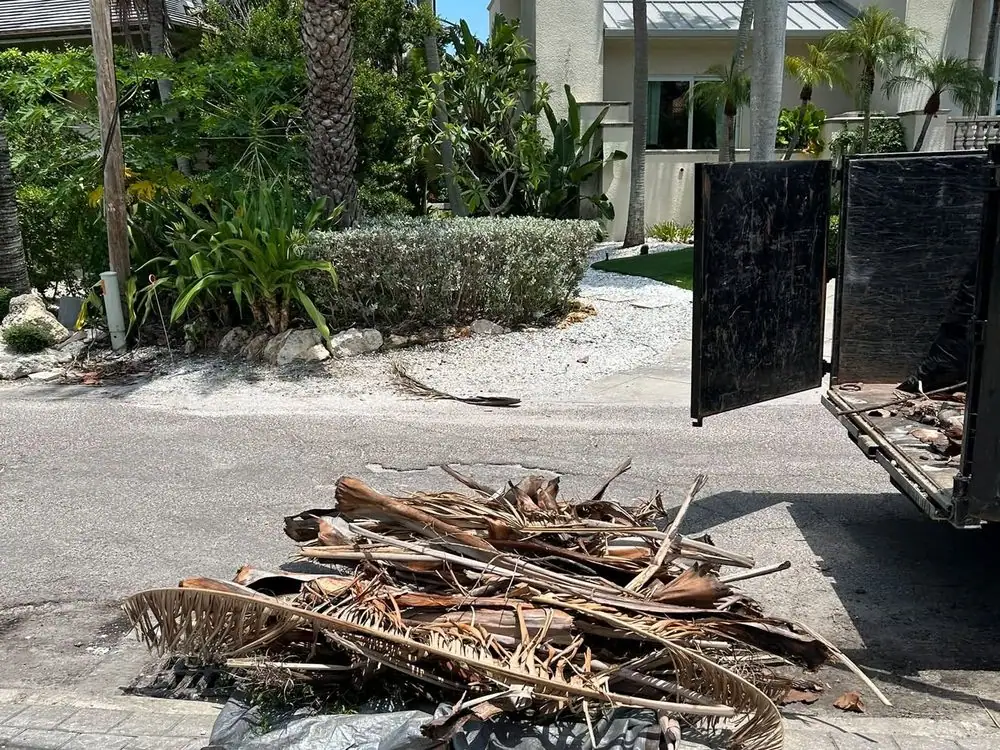
What it costs to have yard waste hauled
If you’d rather not load it yourself, the price guides give these ranges:
| Job | Typical cost | Source |
|---|---|---|
| Hauling branches, leaf piles and brush | $70 to $500, depending on volume | Angi |
| Spring or fall yard cleanup by a landscaper | $100 to $250 | Angi |
| Landscaping material removal | $140 to $180 a ton | Angi |
| Composting food and yard debris | $70 to $100 | HomeGuide |
| Yard waste added to an estate cleanout | $200 to $550 | HomeAdvisor |
The spread comes from volume and access. Angi notes that a pile a truck can back right up to costs less in labor than one that has to be carried around the house, and that larger, heavier loads needing several trips or special equipment push the price up. Angi also suggests offering branches and tree debris to people looking for free firewood, which costs nothing.
The county’s fee is part of every hauler’s price. Here’s what it adds by weight:
| Load weight | County fee at $5.20 per 100 lbs |
|---|---|
| 300 lbs (a couch and a chair) | $15.60 |
| 500 lbs | $26.00 |
| 1,000 lbs | $52.00 |
| 2,000 lbs (1 ton) | $104.03 |
| 4,000 lbs (2 tons) | $208.06 |
Can you burn yard waste in Pasco County?
Sometimes. The Florida Forest Service says burning yard waste doesn’t need an authorization if you follow the state’s rules (Florida Forest Service):
- The yard waste must fit in an 8-foot-wide pile or a noncombustible container.
- Light it after 9 a.m. Eastern time, and have it out one hour before sunset.
- Keep it 25 feet from your home, woods, brush or anything else that can burn.
- Keep it 50 feet from a paved public road and 150 feet from other occupied buildings.
- Burn only yard waste. Burning household garbage, paper products, treated lumber, plastics, rubber, tires, pesticides, paint and aerosol cans is illegal.
Clear the ground around the pile down to bare dirt, keep a shovel and a hose close, cover a burn barrel with wire mesh so sparks can’t escape, and never leave the fire. If it gets away, you can be held responsible for the cost of putting it out and for damage to other people’s property.
Piles bigger than 8 feet across need an authorization from the Florida Forest Service, which you can apply for online. The state also says not to burn on windy days, in dry weather, during high fire danger or right after a storm. Local rules come first, so check with your HOA and, if you live inside a city like Port Richey or New Port Richey, with the city before you light anything.
Pasco County burn bans
When it gets dry, Pasco County bans burning outright. In April 2023 the county put all of Pasco under an emergency burn ban covering open fires, campfires, bonfires and burning yard debris or trash, in effect until conditions improved (Laker/Lutz News). In May 2024 it did the same for unincorporated Pasco (Bay News 9).
Both times, grills and smokers that keep the fire contained were still allowed, and the ban ended only when the county said so. A backyard fire pit or a bonfire counts as burning, so it’s off during a ban too. Violations can be reported to the Pasco County Emergency Communications Center at 727-847-8102.
Spring is usually the driest stretch of the year here, before the summer rains, and both of those bans came in spring. Even with no ban, the Florida Forest Service says to hold off on dry or windy days. If you’re planning to burn, check the county’s news page for an active ban on the day you plan to light it, not the week before, or call Pasco County customer service at 727-847-2411.
Less to haul: clippings, mulch and palm pruning
The cheapest yard waste is the kind you never bag. UF/IFAS’s Florida-Friendly Landscaping program says to leave grass clippings on the lawn when you mow, where they break down and feed the soil, and to use leaves as mulch in beds or add them to a compost pile. Small twigs and limbs can be tucked in behind plantings where they break down and feed the plants around them (UF/IFAS Florida-Friendly Landscaping).
Leaving clippings works best with frequent mowing. UF/IFAS’s mowing guide says to mow often enough that no more than a third of the blade height comes off at a time, so the clippings stay short and break down fast (UF/IFAS, Mowing Your Florida Lawn).
Palms are the other big source of fronds, and many get cut back far more than they need. UF/IFAS says to remove only fully brown fronds, never to cut past the 9 o’clock and 3 o’clock line, and that hurricane-style trimming actually leaves palms less able to stand up to hurricane winds (UF/IFAS Gardening Solutions). Royal, foxtail and Christmas palms drop their old fronds on their own and need no pruning at all. Pasco’s own extension office calls the “hurricane cut” a myth that damages the palm: palms store nutrients in their leaves, and over-pruning is a common reason palms fail in high winds (UF/IFAS Extension Pasco County).
Cutting fewer green fronds means smaller piles, fewer trips and a healthier tree. Do the trimming early in the season, not the day before a storm, so the trimmings are gone before anything is on the way.
When the pile is too big for the hauler
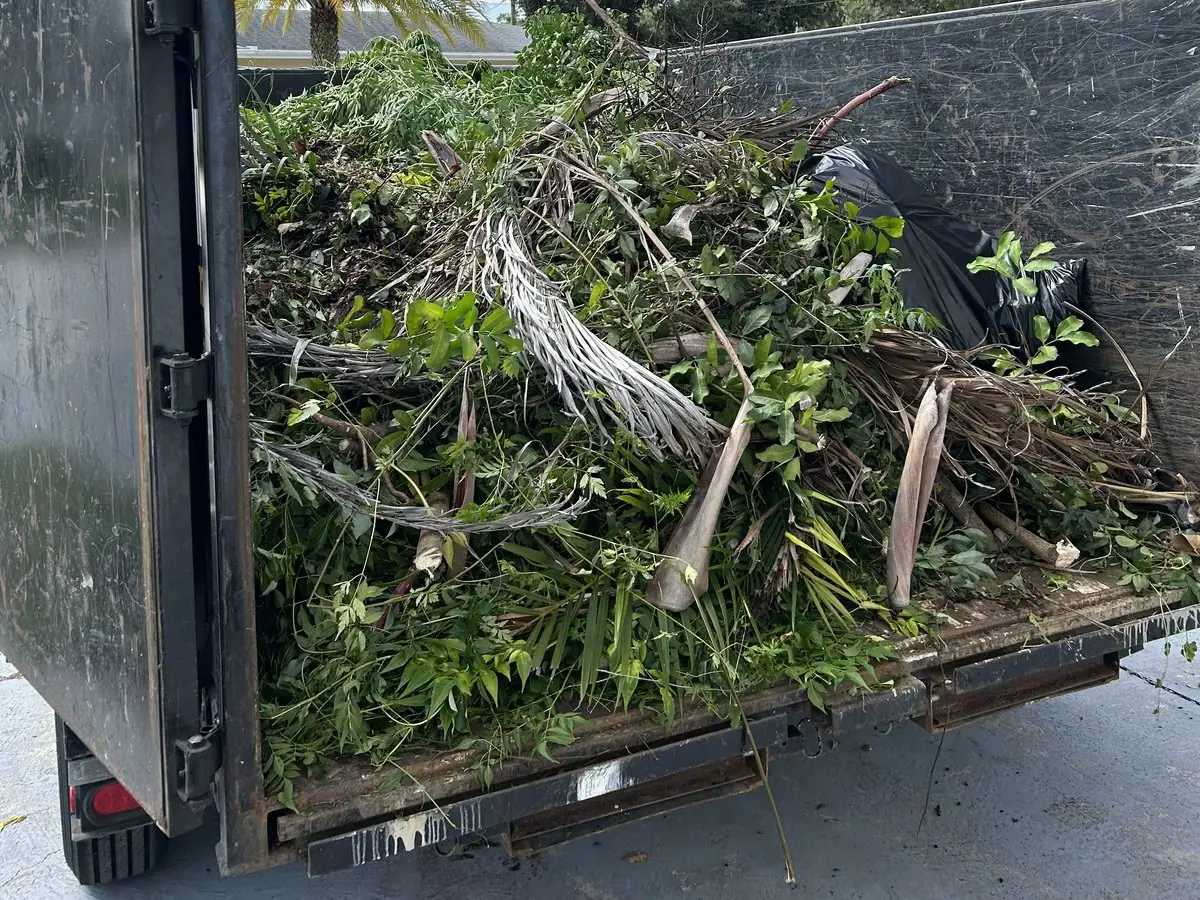
Weekly pickup works for normal yard trimming. It doesn’t work well for a big tree trim, a fence line that’s been cleared, a lot that’s grown over, or a driveway covered in brush. Each hauler limits how much it takes at once, and a big pile can sit at the curb for weeks if it goes out a little at a time.
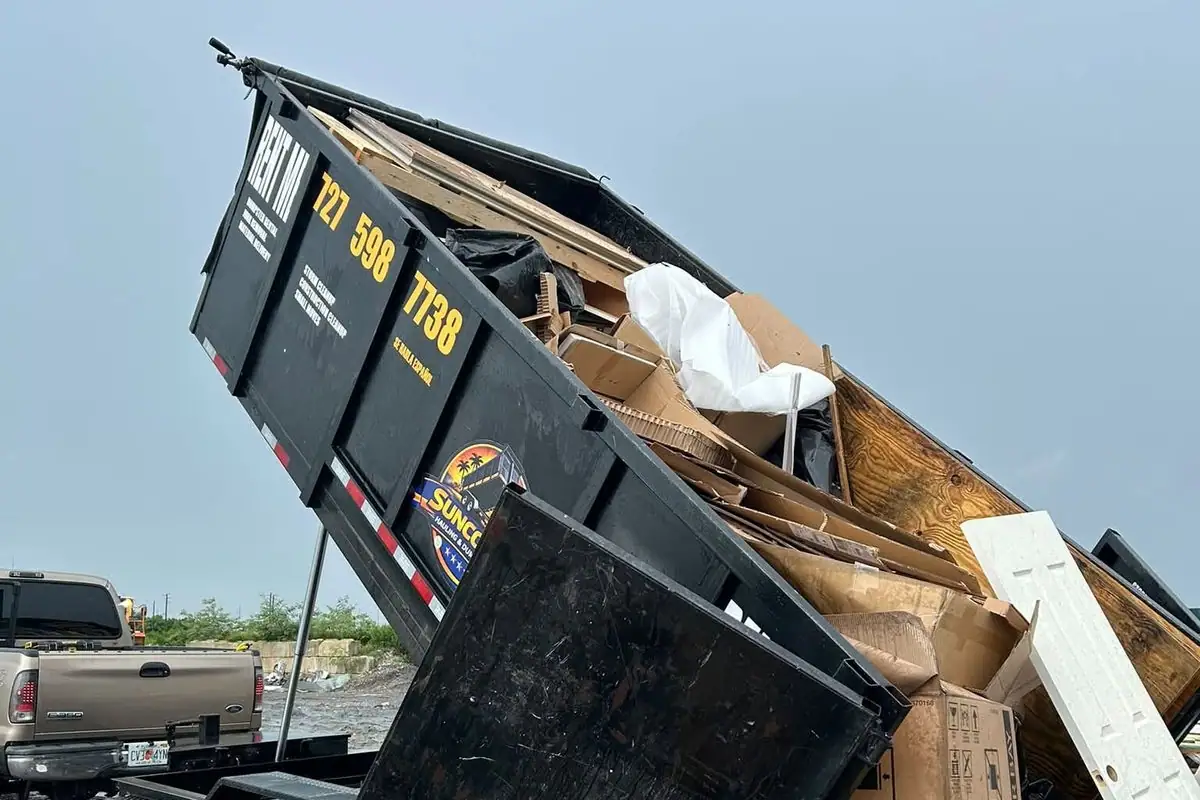
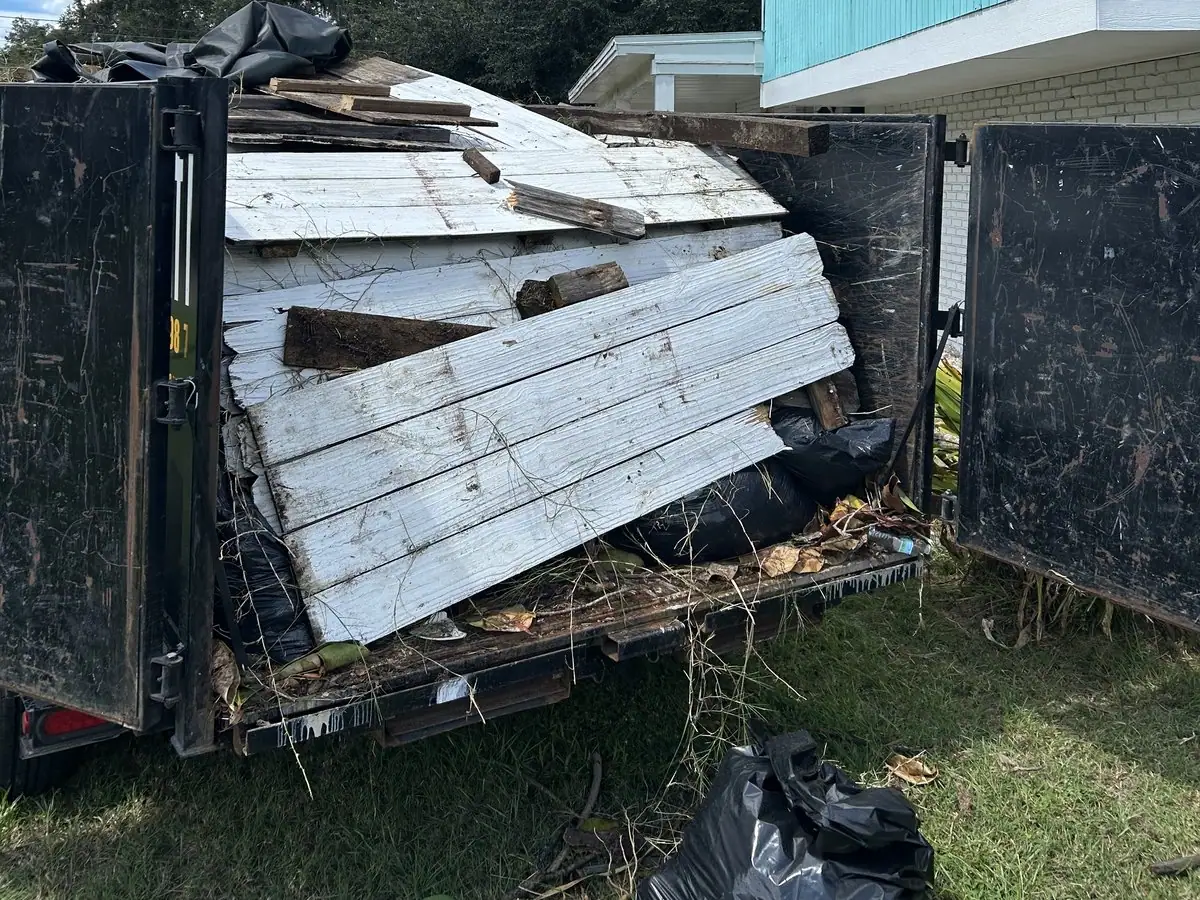
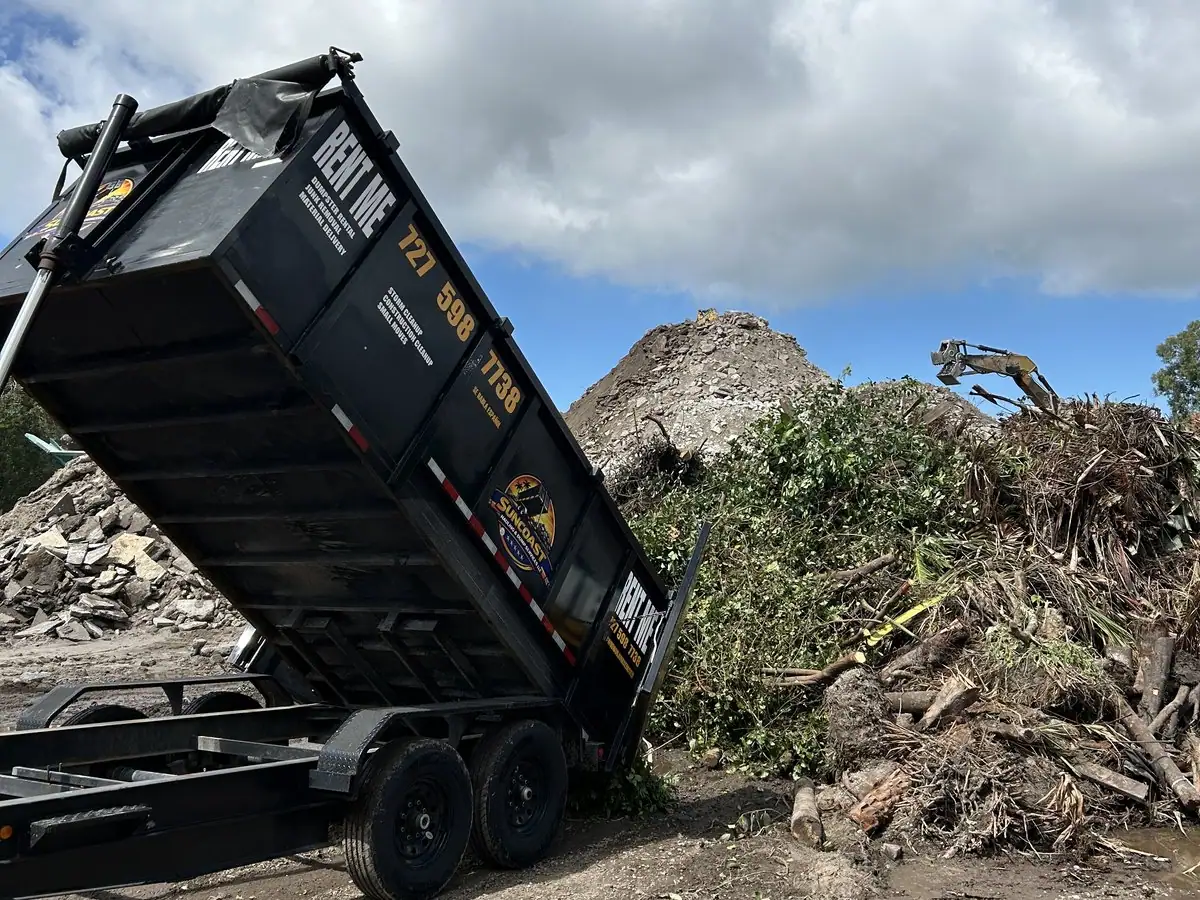
That’s when a one-time haul makes sense. We load the whole pile, haul it and rake the area. If you’d rather do the work yourself over a weekend, a dump trailer dropped in the driveway lets you fill it as you go. See our yard debris and storm cleanup page for what we take, or lawn care if you’d like the yard kept down after.
A pile that’s been sitting a few weeks often has more under it than on top: vines, roots, a few old fence boards. Mention it when you send photos so the price covers it. For an overgrown lot, cutting it down and hauling it off can be one visit, since we do both.
Yard waste after a storm
Storm debris follows different rules. After a major storm the county may run its own debris pickup with sorting rules of its own, and the Florida Forest Service says not to burn right after a storm and to find another way to get rid of the debris (Florida Forest Service).
The amounts can be huge. After Hurricanes Helene and Milton in 2024, Pasco County collected about 1.3 million cubic yards of storm debris, with as many as 115 trucks running at once, and finished in February 2025 (Laker/Lutz News). Anything left after that went back to the normal rules: four-foot bundles with the regular trash, and a call to your hauler for bulky items.
During storm pickup, how you set the pile out matters. After Helene the county asked residents not to bag debris and not to mix yard debris with furniture, mattresses or household garbage (Pasco County), because the crews collecting branches aren’t the ones collecting couches.
Our storm debris guide covers what Pasco did after Helene and how to set debris out so it gets picked up.
Questions people ask
What counts as yard waste in Florida?
The Florida Forest Service counts vegetative debris from routine yard upkeep, such as brush, leaves, tree limbs and palm fronds. Treated lumber, plastic and household trash are not yard waste and can’t be burned with it.
Can I put yard waste in plastic bags?
That’s up to your hauler. Some want bags or cans and some want loose bundles, so check with the number on your bill. For storm debris, the county asked residents not to bag anything.