The short answer
After a major storm, Pasco County may run its own curbside debris pickup and free drop-off for residents, as it did after Hurricane Helene in 2024 (Pasco County). Piles have to be sorted, kept out of bags and clear of hydrants and mailboxes. Contractor debris isn’t collected, so repairs need their own hauler.
After Helene and Milton in 2024, Pasco County hauled away about 1.3 million cubic yards of storm debris, and it took until February. Knowing how the county runs storm pickup, what it leaves behind and how to set out a pile the right way gets your street cleared faster and your claim paid.
What Pasco County did after Helene and Milton
On September 28, 2024, Pasco County announced free drop-off of Helene-related debris at West Pasco Resource Recovery, 14606 Hays Road in Spring Hill, open 7 days a week from 7 a.m. to 4:30 p.m. until further notice, for Pasco residents with proof of residency. It also started picking up storm debris in affected neighborhoods over the following days (Pasco County notice).
Only residential storm debris was eligible for free disposal. Commercial debris was not accepted. Regular trash kept going out with private haulers on the usual day.
Hurricane Milton followed in October, and the cleanup ran into the new year. In February 2025 the county said it had finished, after collecting about 1.3 million cubic yards of storm debris with as many as 115 trucks running at once (Laker/Lutz News). Anyone with debris left over was told to cut yard waste into four-foot bundles for regular trash pickup and to call their hauler for furniture and mattresses.
Along the way the county posted an online map with estimated pickup times by area, updated as crews moved. By October 24 it had already collected more than 159,000 cubic yards, which Bay News 9 put at about 50 Olympic swimming pools. It also waived drop-off fees for residents who showed ID with a Pasco address (Bay News 9). After Milton, Fox 13 reported both drop-off sites open every day, West Pasco until 7 p.m., with the county warning that flooding would delay curbside pickup (Fox 13).
Every storm is different, and the county announces its own plan after each one. Follow Pasco County’s news page and alerts after a storm for the dates and rules that apply that time.
How to sort storm debris at the curb
After Helene, the county asked residents to follow these rules, and they’re a good guide for any storm:
- Separate all storm debris, whether you drop it off or leave it at the curb.
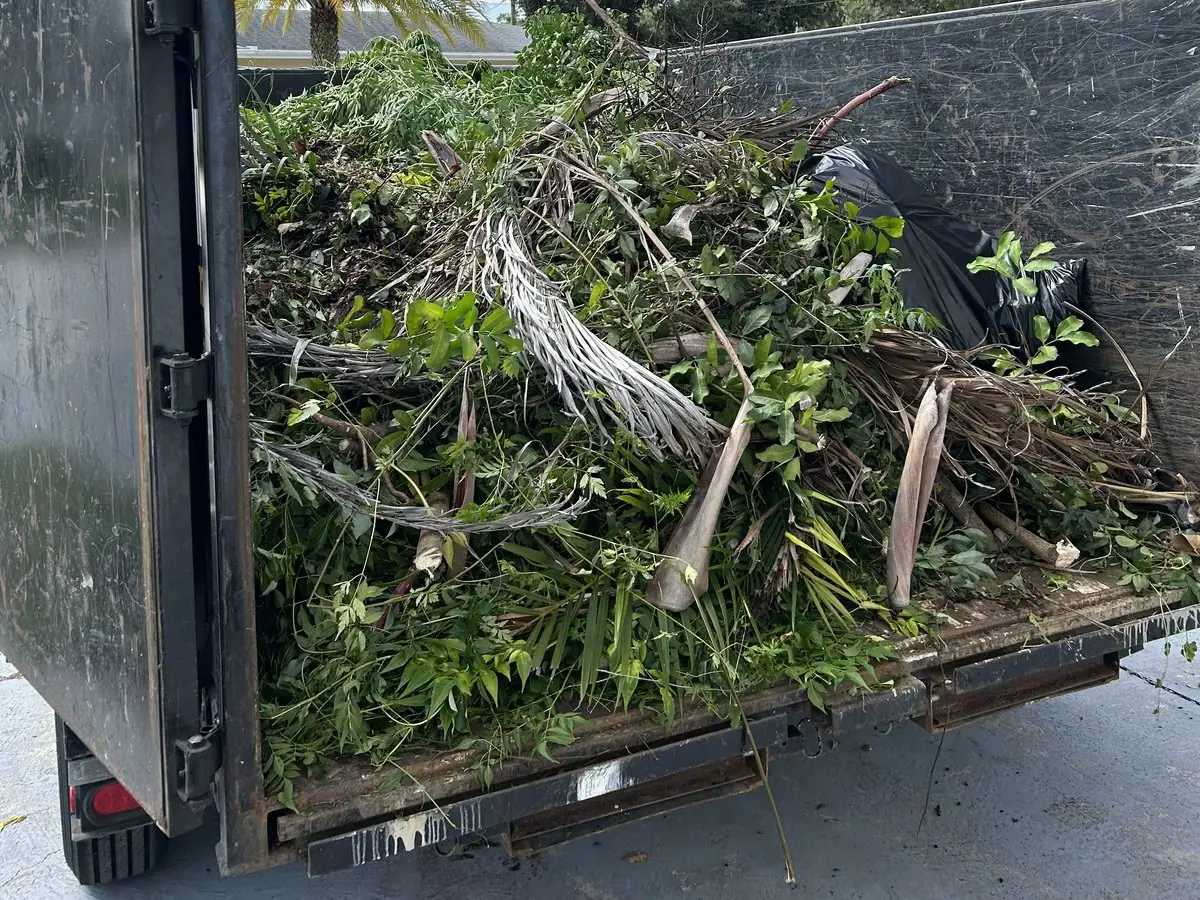
- Don’t mix yard debris (branches, leaves) with home debris (mattresses, chairs, couches) or with household garbage.
- Empty refrigerators and freezers, and secure or remove the doors.
- Don’t put debris in bags.
- Put piles at the curb or roadside without blocking fire hydrants, mailboxes, electrical boxes or other structures.
- Keep lithium-ion batteries in a dry container, away from other debris.
FEMA’s debris guidance splits curbside debris into six piles (FEMA):
- Vegetative debris: branches, leaves and plants.
- Construction debris: drywall, lumber, carpet and furniture.
- Large appliances: refrigerators, washers, dryers, stoves and dishwashers, with the doors secured.
- Electronics: TVs, computers and phones.
- Hazardous waste: oil, batteries, pesticides, paint and cleaning supplies.
- Household garbage: food, paper and packaging, which goes out with your regular trash.
If old painted wood might have lead paint on it, FEMA says to keep it damp or sealed in plastic bags so the paint dust doesn’t get into the air.
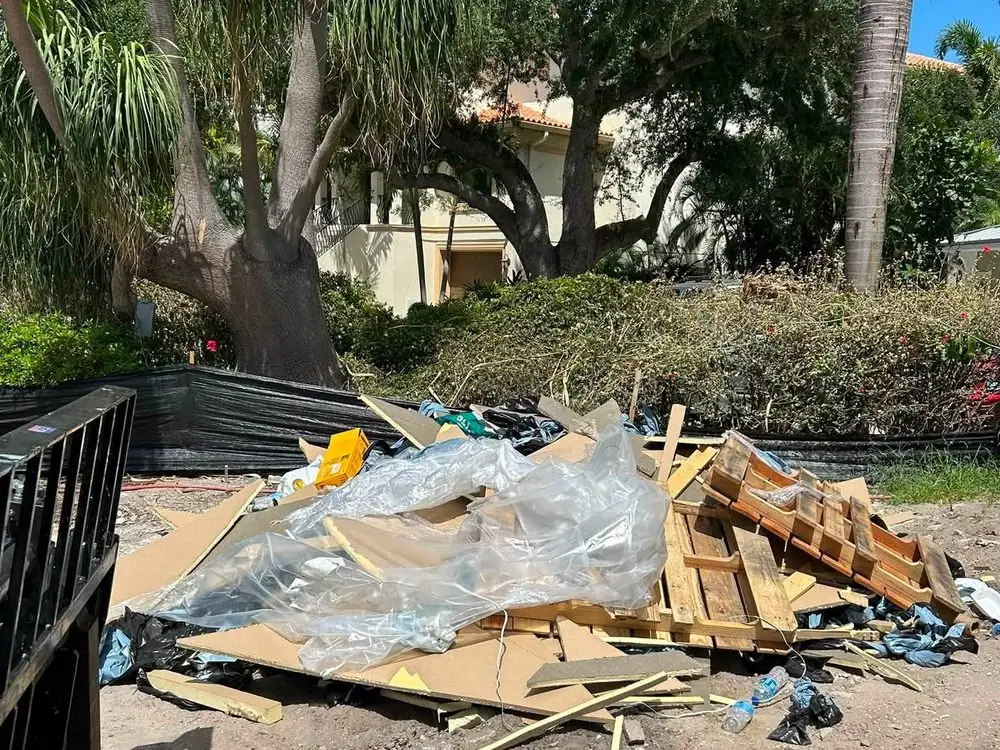
Mixed piles are the most common reason debris sits. Crews collecting branches usually aren’t collecting furniture on the same pass.
Where to put the storm debris pile
Put piles at the curb or roadside, never in the road. Pasco asked residents not to block fire hydrants, mailboxes, electrical boxes or other structures (Pasco County), and FEMA adds trees, poles and meters to that list and says not to block the roadway (FEMA).
Watch for cables. FEMA says to look carefully for any visible cables before you start moving debris, and if you see any, to wait for professionals to handle them.
Lithium-ion batteries need their own spot. After Helene, the county asked for them in a dry container like a bucket or plastic tub, set at the curb away from the rest of the debris, and picked them up separately. Rechargeable batteries from drills, phones and laptops can catch fire, which is why the county says they never belong in the trash (Pasco County household hazardous waste).
Generators leave their own leftovers. Gas cans, used oil and 20-pound propane tanks go to the county’s hazardous waste centers, not the storm pile; gas and oil are free up to 10 gallons a day, and a propane tank is $5 (Pasco County household hazardous waste).
Refrigerators and freezers go out empty, with the doors removed or secured. Spoiled food goes in your regular garbage, not the storm pile. FEMA also says to take water-damaged materials out of the house and put them at the curb for pickup, which keeps the wet carpet and drywall from sitting inside.
What county storm pickup doesn’t cover
The county’s Helene notice was clear on a few limits (Pasco County notice):
- Contractor debris. Construction debris from contractors, like a roof tear-off or water-damaged drywall removed by a contractor, was not collected.
- Commercial debris. Only residential storm debris qualified for free disposal.
- Timing. The county warned that curbside debris might not be picked up right away.
That leaves a lot of real cleanup jobs out: roofing and drywall from repairs, a lanai cage that came down, debris on a property that isn’t a home, or a pile you need gone before the adjuster, the buyer or the HOA comes by.
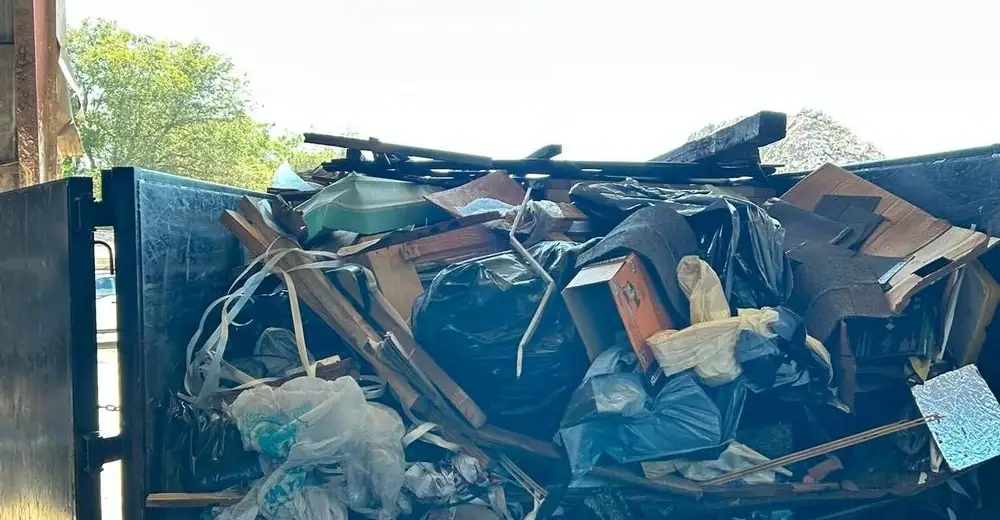
Ask your contractor before work starts whether hauling the debris is in the price. If it isn’t, a roof tear-off or a gutted bathroom needs a dumpster, a dump trailer or a hauler, because the county’s storm crews will leave it at the curb.
Get that answer in writing before the work starts. If it’s on you, our dump trailer versus dumpster guide compares the two ways to hold a roof or a remodel’s worth of debris.
Take photos and keep receipts
Pasco urged residents to document storm debris for insurance in case their provider asks for proof (Pasco County). FEMA’s advice is the same: contact your insurance company first to file a claim, photograph or video the damage, and keep every receipt for repair work (FEMA).
Before anything is moved, photograph the damage, the debris piles and each damaged thing that’s being thrown out, with the house in the background where you can. A short video walking through each room works too. Write down what each damaged item was and roughly when you bought it, and keep a short list as the cleanup goes: the date, what went out, who hauled it and what it cost.
Then don’t wait long. The EPA says water-damaged areas and items should be dried within 24 to 48 hours to prevent mold, and that soaked carpet, ceiling tiles and other porous materials may have to be thrown away if they get moldy (EPA). Photos first, then get the wet carpet and drywall out of the house.
Be careful who you sign with. After Milton, Florida’s Chief Financial Officer urged storm victims to call their insurance company first, keep receipts for emergency repairs, and not sign anything for contractors going door to door asking for their insurance rights. The state’s insurance helpline is 1-877-693-5236 (WFLX).
Don’t burn storm debris
The Florida Forest Service says to refrain from burning right after a storm and to find another way to get rid of the debris (Florida Forest Service). Storm piles are usually bigger than the 8-foot limit for burning without an authorization, and they’re often mixed with things that are illegal to burn, like treated lumber, plastics and household trash.
Pasco also bans burning when it’s dry, as it did across the county in April 2023 (Laker/Lutz News), and the weather after a storm can turn dry fast. Our yard waste guide covers the burning rules in full.
Even a small backyard fire is risky in the weeks after a storm. The state says not to burn in dry weather or high fire danger, and storm piles stacked against fences and sheds break the 25-foot setback on their own.
If the pile is mostly branches and you’re short on time, a dump trailer in the driveway lets you load it as you cut, with no fire and no wait for the county.
Getting your yard ready before the next storm
The best time to shrink a storm pile is before the storm. UF/IFAS says to remove only fully brown palm fronds, never to cut past the 9 o’clock and 3 o’clock line, and that hurricane-style trimming actually leaves palms less able to stand up to hurricane winds (UF/IFAS Gardening Solutions). Royal, foxtail and Christmas palms shed old fronds on their own and need no pruning. Pasco’s extension office goes further: it calls the “hurricane cut” a myth that damages the palm, and says over-pruning is a common reason palms fail in high winds (UF/IFAS Extension Pasco County).
The same office says the parts worth removing are completely dead fronds, damaged leaves and seed pods. Do it early in the season, and put the trimmings out in bundles on your regular pickup day so nothing is still lying in the yard when a storm comes.
Anything else loose in the yard is debris waiting to happen: old patio furniture, a broken grill, leftover lumber. If it’s been meant to go for a while, a pickup before the season is easier than chasing it down the street after.
When to call a hauler
County pickup is free, but it can take weeks to reach your street, and it doesn’t take everything. A hauler makes sense when:
- The debris is from repairs, like roofing, drywall, flooring or a torn-out fence.
- The pile is blocking your driveway or a neighbor’s.
- You need it gone for a sale, a rental turnover or an inspection.
- It’s a mix the county won’t take in one pile.
- Wet furniture, carpet and drywall need to leave the house now, not when the county reaches your street.
When a storm comes through Pasco County, we put storm cleanup first on our schedule. Text photos of what came down to (727) 598-7738, with the address and a note on whether any of it is from repairs, and we’ll tell you when we can get there. See our yard debris and storm cleanup page, or rent a dump trailer if you’d rather load it yourself. We work from Hudson to Palm Harbor.
Questions people ask
Does homeowners insurance pay for storm debris removal?
It depends on your policy. Call your insurance company before you pay for cleanup, and ask what it covers and what proof it wants.
Do you clear storm debris for rentals and businesses?
Yes. We work for homeowners, landlords, contractors and businesses. After Helene, county storm pickup covered only residential debris, so commercial properties usually need a hauler anyway.